A Tale of Pond Transformation
The Ballad of Flo the Pond: A Tale of Transformation
Flo had seen better days.
Once upon a time—oh, maybe fifteen summers ago—she'd been the pride of Willow Creek Estates. Children squealed as they skipped stones across her glassy surface. Couples strolled her banks at sunset, cameras clicking. The neighborhood newsletter even featured her on the cover with the headline: "Our Crown Jewel."
But that was before the muck came.
"I'm not complaining," Flo told herself, though if ponds could sigh, she'd have been doing a lot of it. "This is just... nature."
The truth was harder to swallow than the layer of algae currently blooming across her surface like an uninvited green blanket. Flo had become what the HOA president delicately called "an aesthetic challenge" and what the residents less delicately called "that swamp thing by the clubhouse."
Every spring, the chemical treatment trucks would arrive. Crews in boots would dump their solutions into her waters, and for a few glorious weeks, Flo would clear up. But like a bad habit, the algae always returned—thicker, angrier, more stubborn than before.
"The chemicals aren't working anymore," she overheard Mrs. Henderson tell Mr. Patel one morning.
"Maybe we need to dredge?" Mr. Patel suggested.
Flo shuddered. She'd heard horror stories from her cousin, Lake Murray, about dredging: the permits, the mess, the cost that made HOA boards weep into their quarterly budgets.
"I just want to be beautiful again," Flo whispered to the cattails. "Is that so much to ask?"
One Tuesday in April, a woman named Maria from Fountains Forever arrived with a laptop and a knowing smile. She stood at Flo's edge, observing quietly while the board members fidgeted.
"So, what do you think?" asked Mrs. Henderson. "More chemicals? Bigger fountain?"
Maria knelt down, scooping up a handful of bottom muck. "The problem isn't what you're seeing on top," she said. "It's what's been accumulating down below for years. This organic sediment—it's like a 24/7 buffet for algae. You keep treating the symptoms, but the kitchen stays open."
Flo's attention perked up. Finally, someone who got it.
"Fountains help with aeration," Maria continued, "but they don't consume the muck. Chemicals kill what's growing today, but tomorrow the nutrients are still there, feeding the next bloom. You're stuck in an expensive cycle."
"So what's the answer?" Mr. Patel asked. "Dredging?"
"There's a better way." Maria pulled up satellite images of Flo on her laptop. "Bio-Health Pods. They work 24/7 to host, grow, and distribute beneficial bacteria that actually eat the organic muck. Think of it as hiring a cleaning crew that never clocks out."
Flo listened, fascinated, as Maria explained the system. The pods would be installed easily—no excavators, no permits, no two-week disruption. Inside each pod, specialized bacteria would multiply, targeting the nutrients that fed Flo's algae problem. The bacteria would consume the muck layer, clarify the water, eliminate odors, and best of all—keep working continuously.
"It's completely natural," Maria said. "Safe for wildlife, safe for swimming, chemical-free. You're essentially helping Flo heal herself."
Heal myself? Flo thought. I've been waiting fifteen years for someone to say that.
Installation day came faster than Flo expected. The Bio Health Pods By Rigero arrived with pods that looked almost elegant—purposeful technology that didn't scream "pond problem here!" Within two hours, the system was running. No noise. No fuss. Just quiet, persistent work happening below her surface.
At first, Flo didn't feel much different. The bacteria needed time to establish their colony, Maria had explained. "Think of it like planting a garden," she'd said. "You don't get tomatoes on day one."
But by week three, Flo noticed something remarkable: the smell had changed. That swampy, sulfur odor that made residents speed-walk past her? Gone. The water near the pods looked clearer, like someone had turned on a light underwater.
By week six, the algae blooms that usually colonized her shallows never materialized.
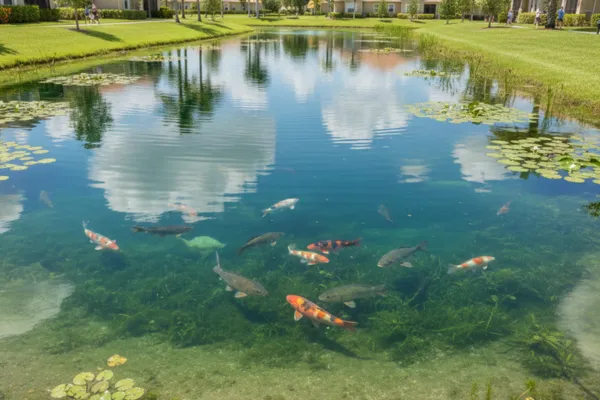
By week twelve, Flo could see her own bottom again—smooth sand and stone instead of that thick, black muck that had buried her original beauty.
"Look at the pond!" a child shouted one Saturday morning, pointing excitedly. "You can see fish!"
Flo preened. Yes, you absolutely could see fish. Three largemouth bass and a whole school of bluegill she hadn't realized she'd been hosting in her murky depths.
The transformation didn't stop at Flo's waterline. The HOA's quarterly chemical treatments—$4,500 a pop—became a line item of the past. The "dredging fund" Mrs. Henderson had been building? Redirected to new landscaping. Residents started walking the perimeter path again, stopping to take pictures, hosting evening gatherings at the benches that had sat unused for years.
"I still can't believe it," Mr. Patel said during a board meeting, reviewing before-and-after photos on his phone. "Same pond. No chemicals. No dredging. Just... science doing what science does."
"The pods work while we sleep," Mrs. Henderson added, clearly pleased with herself for championing the solution. "It's the closest thing to 'set it and forget it' we've ever had."
Flo, listening from below, felt something she hadn't experienced in over a decade: pride.
She wasn't just cleaner—she was healthier. The ecosystem that had been struggling under layers of muck was now thriving. Dragonflies returned. A heron took up residence. Native plants that had been choked out by algae began reclaiming the shallows.
"You know what I've learned?" Flo said to herself one evening, watching the sunset paint her now-clear surface in pinks and golds. "Sometimes the best solutions aren't the loudest or the most dramatic. Sometimes they're the ones that work with nature instead of against it."
The Bio-Health Pods hummed quietly below, their beneficial bacteria working through the night—hosting, growing, distributing, consuming. Healing.
And Flo? She was doing what she did best: reflecting beauty, supporting life, and reminding everyone in Willow Creek Estates why she'd earned that newsletter cover all those years ago.
She was, once again, their crown jewel.
The End
The Moral of Flo's Story:
Your pond or lake isn't broken—it's just been fighting a losing battle against organic muck accumulation. The Bio-Health Pod system offers what chemicals and fountains can't: a natural, continuous solution that addresses the root cause. Let Fountains Forever help your water feature rediscover its clarity, beauty, and health—just like Flo did.
Ready to transform your pond or lake? Contact Fountains Forever, Florida's exclusive dealer for Bio-Health Pod Systems, and start your journey to clearer, healthier water today.

